Gallery, Small Museum or Open Studio: Picking a Cultural Stop
Choose a gallery, small museum, or open studio by the attention and time your afternoon allows, so your cultural stop feels engaging rather than rushed.
A gallery, small museum, or open studio can each make a good cultural stop, but they ask for different kinds of attention. If you’re deciding where to go this afternoon, start with the pace you want: focused looking, a compact story, or a glimpse of creative work in progress.
These are not rigid categories. A small museum may include changing exhibitions, and an open studio might display finished work like a gallery. Still, choosing by the kind of visit you want makes it easier to pick a place that fits your available time and energy.
1. Choose a gallery when you want to look closely
A gallery visit often works best when you want to spend time with a small group of artworks rather than cover a broad subject. The room may be quiet, the display may have a clear visual thread, and there may be no fixed route. You can pause in front of one piece, move on, then return to it.
That open structure suits an afternoon when your attention feels steady but you do not want a tightly scheduled outing. You can arrive with a simple intention: look for repeated colors, notice how materials change from one work to the next, or see which piece holds your attention longest. You do not need specialist knowledge to make those choices.
Check the gallery’s current exhibition page before you leave. Look for the number of rooms, the type of work on view, any admission or booking information, and whether the space is open to casual visitors. A small gallery may be easy to enter but host an event that changes the usual visit.
A gallery can also be a useful choice when you want a quieter stop between other plans. Unlike a route with several destinations, it gives your attention one main subject. Think of it like opening a book to a single short chapter: you can linger without needing to finish a larger story.
2. Pick a small museum for a compact story
A small museum is a stronger fit when you want context, objects, or a sequence that helps explain a subject. Its displays may connect local history, craft, design, or a particular collection. Even a short visit can feel substantial when each room adds a piece to the same account.
Look at the museum’s floor plan or visitor information before setting out. A compact building may have a clear loop, while another may divide its collection into separate rooms with different themes. If you have limited time, choose one section to focus on rather than trying to absorb every label.
Museum labels can enrich a visit, but reading each one is not the only way to take part. You might first scan the objects, then choose a few labels that answer a question you already have. That gives the visit a shape without turning it into a reading assignment.
Choose a small museum when you are curious about how things fit together: what an object was used for, how a neighborhood changed, or why a craft developed in a particular place. If you mainly want to follow a personal visual response, a gallery may feel less demanding.
3. Visit an open studio when process matters
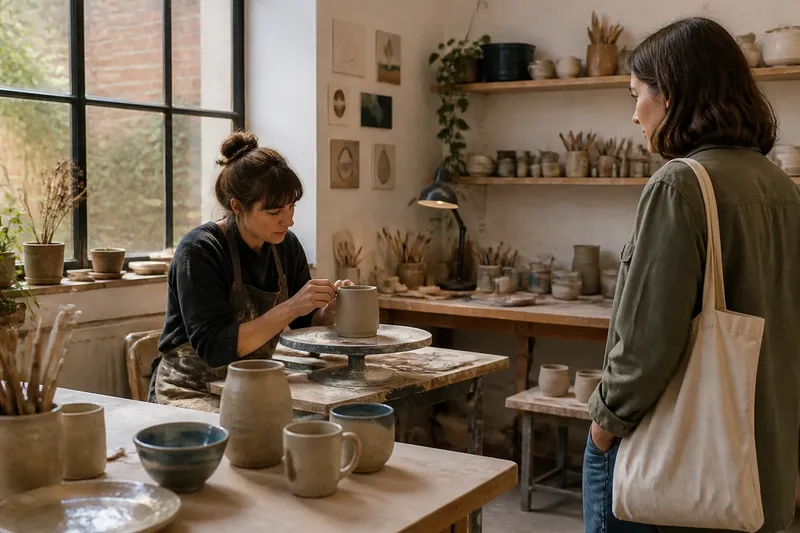
An open studio invites a different kind of attention: you may be able to see tools, materials, worktables, and unfinished pieces alongside completed work. The interest lies not only in what an artist made, but in how a working space shapes the making.
These visits can feel more conversational than a gallery or museum, though that depends on the event. Some studios welcome questions; others provide a quiet viewing area while the artist works. Read the event description for opening hours, access details, and any guidance about photography or touching objects. Treat the space as a workplace, not a display room you can rearrange.
If you hope to speak with the artist, prepare one specific question about a material, technique, or choice visible in the work. A direct question is easier to answer than a broad request to explain everything. If the artist is occupied, you can still observe how tools and materials are arranged.
An open studio is a good choice when you are curious about making and comfortable with a little uncertainty. Work may be in progress, the layout may be informal, and the visit may depend on the artist’s availability. If you prefer a carefully arranged display and independent browsing, consider a gallery instead.
4. Match the stop to the attention you have
Before choosing a venue, notice whether you want to concentrate, absorb information, or watch a process. That is more useful than choosing by prestige or assuming that one format is always more rewarding.
- Choose a gallery if you want open-ended looking and the freedom to stay with a few works.
- Choose a small museum if you want a subject explained through objects, rooms, and labels.
- Choose an open studio if you want to see materials, working methods, or unfinished pieces.
- Choose the simplest visit if your energy is low: check the venue’s layout and pick a single room or feature to focus on.
- Choose the most social setting if conversation is part of the appeal, while checking whether the event actually welcomes questions.
Say you have a free afternoon, feel curious but not ready for a long visit, and want to see how local ceramics are made. You check the listings and find a studio open to visitors, with finished pots and work in progress on display. That sounds like a better fit than a museum collection that would take more reading; if the studio is busy, you can still look at the tools and forms without needing a conversation.
5. Check the practical details before you set out
A cultural stop can be small in scope and still require a little planning. Confirm the day’s opening hours, whether entry needs a booking, and whether the exhibition or studio is open to visitors at that time. Check the venue’s own directions for entrances, access information, and any temporary changes.
Then decide how much time you want to give the visit. You do not need to predict every detail. Set a loose boundary, such as leaving when you have seen the room or topic you came for. If you find something compelling, you can stay longer; if not, the visit still has a natural end.
Consider what would make you feel comfortable in the space. A museum may have benches and clear room labels; a gallery may invite quiet movement; an open studio may have narrow work areas or an active workspace. Venue information can help you decide whether the setting suits your needs.
Keep local rules and the venue’s instructions in mind, especially for photography, accessibility, and event entry. If those details are unclear, contact the venue before traveling rather than relying on assumptions.
6. How do you choose between a gallery, museum, and studio?
Which cultural stop is best for a short afternoon?
Choose the venue with the clearest single focus and check its layout before you go. A gallery’s exhibition, one museum room, or a studio visit centered on a particular process can each make a short outing feel complete.
Should you read every museum label?
No. Start by looking at the objects, then read labels that answer a question or add context you want. A few chosen explanations can be more satisfying than trying to read everything.
What should you ask an artist in an open studio?
Ask about something you can see, such as why a material suits the work or how a particular surface is made. Keep the question brief and give the artist room to continue working or decline a conversation.
Can you visit a gallery without knowing much about art?
Yes. Pick one feature to notice, such as color, texture, scale, or how the work is arranged in the room. Your observations can guide the visit without requiring background knowledge.
7. Let the venue set the pace, not your expectations
The best cultural stop is not necessarily the one with the most rooms or the fullest program. It is the one whose demands suit the afternoon you have. A gallery offers room for close looking, a small museum gives objects a connected story, and an open studio makes the working process visible.
For a gallery, small museum, or open studio, choose one reason to go, confirm the visit details, and give yourself permission to leave when that reason has been met. You may notice a detail that changes your plan, but you do not need to turn every cultural visit into a full-day commitment. A well-chosen stop can be enough on its own.